

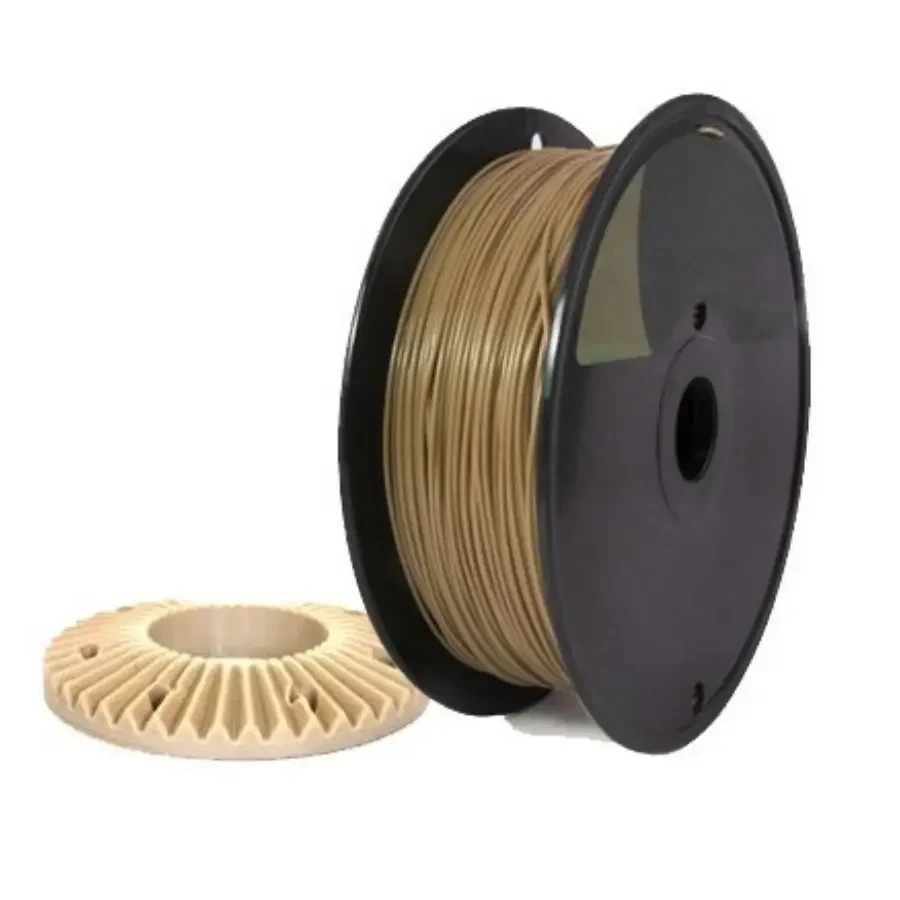
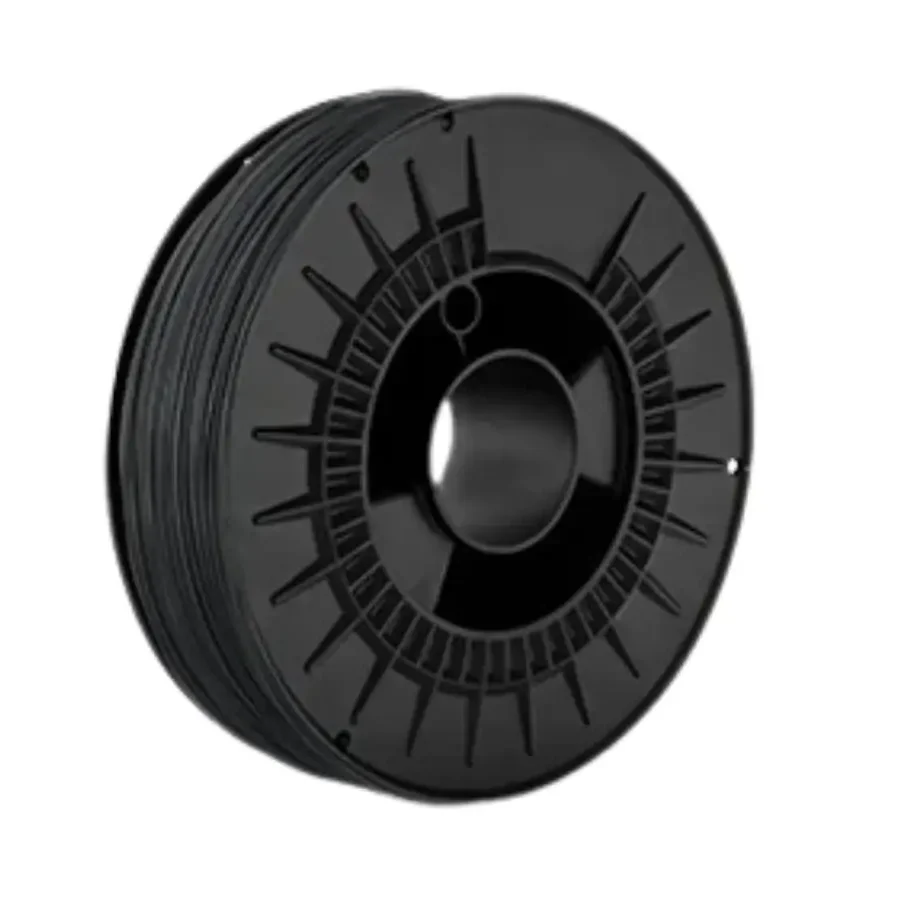
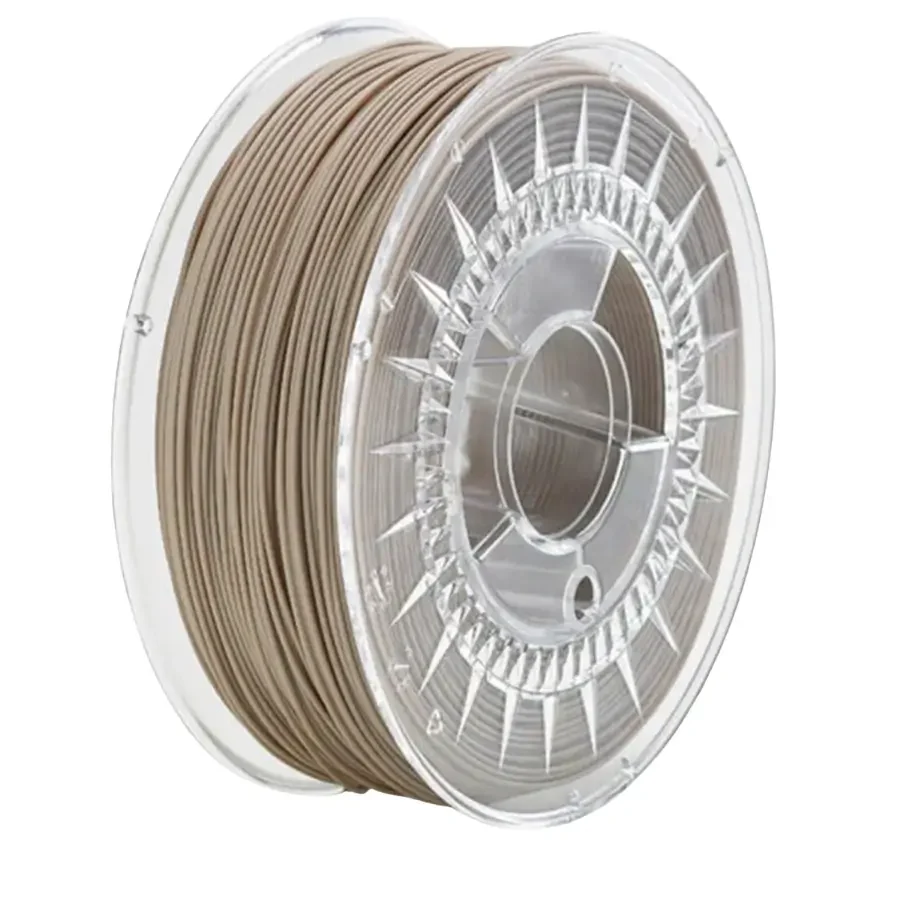
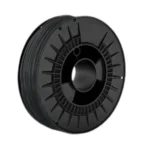
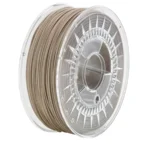
Detailed Advantages of PEEK Filaments
First, let's introduce the advantages of PEEK material itself
Exceptional High Temperature Resistance:PEEK material can withstand continuous use at temperatures up to 260°C, allowing parts made from PEEK to maintain their structural integrity even in high-temperature environments.
Outstanding Strength and Stiffness:PEEK exhibits excellent mechanical properties, offering high strength, high stiffness, and superior creep resistance, making it capable of withstanding high mechanical stresses.
Chemical Corrosion Resistance:PEEK is highly resistant to a wide range of strong acids, strong bases, and organic solvents, making it suitable for chemical, oil, and gas industries in harsh environments.
Biocompatibility:PEEK is highly inert, non-toxic, and does not cause biological rejection, making it an ideal material for medical devices and implants.
Lightweight:With a density much lower than that of metals, PEEK significantly reduces the weight of components while maintaining high strength, which is critical for industries like aerospace and automotive.
Advantages of PEEK Filaments as 3D Printing Materials
High Design Flexibility:3D printing allows for the creation of complex geometries that are difficult or impossible to achieve with traditional manufacturing processes, such as injection molding. These include internal channels, lightweight lattice structures, and complex surfaces.
Rapid Prototyping:Unlike manufacturing molds, which can take weeks or months, 3D printing can transform a design into a physical part in days or even hours, significantly reducing the product development cycle.
Small Batch and Customized Production:3D printing eliminates the need for expensive molds, making it ideal for small batch and highly customized parts. This enables businesses to quickly and efficiently produce personalized products based on customer-specific requirements.
Reduced Material Waste:3D printing is an additive manufacturing technology, meaning it deposits material only where needed. In contrast to traditional subtractive manufacturing methods like CNC machining, it significantly reduces material waste.
Functional Integration:3D printing allows for the integration of the functions of multiple parts into a single, complex component, reducing the need for assembly and connections, thereby improving the performance and reliability of the product.
Disadvantages of PEEK Filaments
- High Cost
- Not Suitable for Large Batch Production of Parts
Allstar Material Offers the Following Specifications of PEEK Filaments
| Diameter (mm) | Theoretical weight per meter (g/m)* | Diameter (mm) | Theoretical weight per meter (g/m)* |
|---|---|---|---|
| 0.3 | ~0.09 | 1.7 | ~2.97 |
| 0.4 | ~0.16 | 1.75 | ~3.15 |
| 0.5 | ~0.26 | 1.8 | ~3.33 |
| 0.6 | ~0.37 | 1.9 | ~3.71 |
| 0.7 | ~0.50 | 2 | ~4.12 |
| 0.8 | ~0.66 | 2.1 | ~4.53 |
| 0.9 | ~0.83 | 2.2 | ~4.97 |
| 1 | ~1.03 | 2.3 | ~5.43 |
| 1.1 | ~1.24 | 2.4 | ~5.91 |
| 1.2 | ~1.48 | 2.5 | ~6.43 |
| 1.3 | ~1.74 | 2.6 | ~6.97 |
| 1.4 | ~2.02 | 2.7 | ~7.53 |
| 1.5 | ~2.31 | 2.8 | ~8.10 |
| 1.6 | ~2.63 | 2.85 | ~8.36 |
| 2.9 | ~8.68 | ||
| 3 | ~9.26 |
- 1.75mm (Our Top Pick)
- Works with 95% of industrial 3D printers
- Easier temperature control than 3mm
- Best balance of flow rate and precision
- What we use for all our testing
- 2.85mm/3mm (For High-Volume Applications)
- Better for large parts (faster printing)
- Requires more powerful heating systems
- Some printers struggle with consistent feeding
- Specialty Diameters (0.3mm – 1.6mm)
- Available on request, but honestly, we don’t recommend them unless you have a very specific application. The smaller diameters are prone to breaking, and larger ones (above 3mm) are hard to heat consistently.