
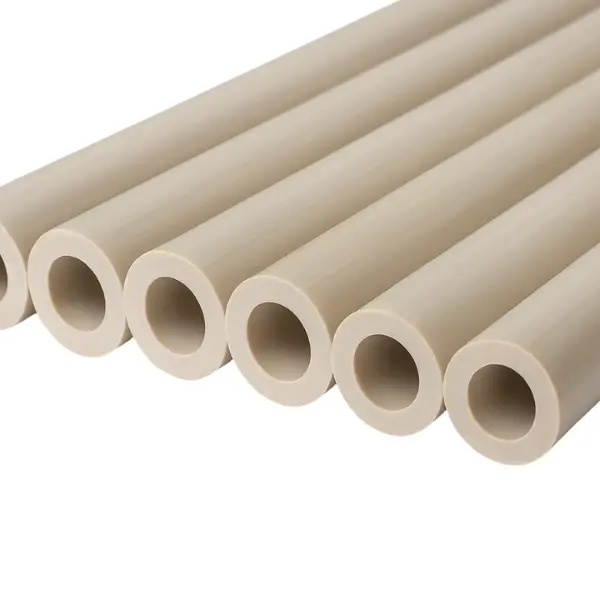
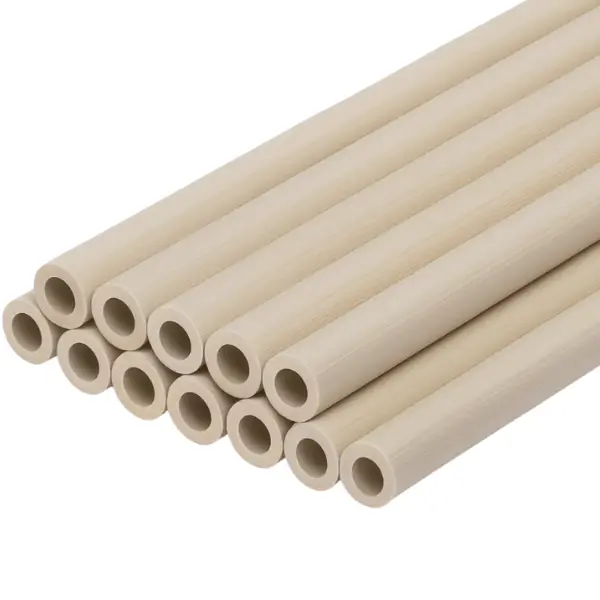
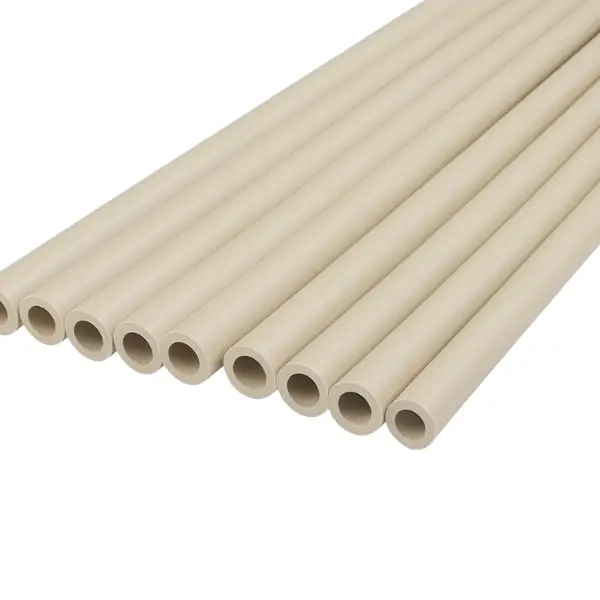
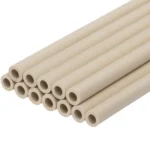
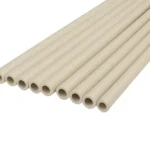
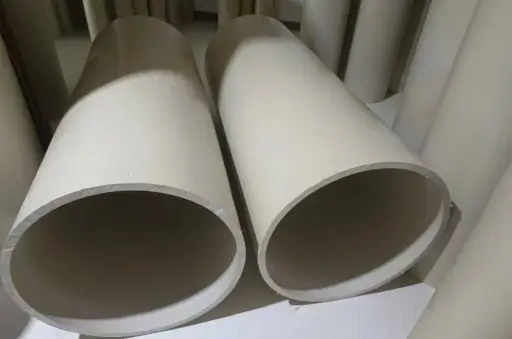
Main Grades and Properties of PEEK Tubes
Pure PEEK Tube
Properties: No reinforcement material, maintaining the base properties of PEEK. It offers excellent mechanical strength, high-temperature resistance (up to 250°C), chemical resistance (acid, alkali, solvent resistance), and electrical insulation.
Applications: Suitable for general industrial applications, electronic devices, medical equipment, aerospace, and other fields.
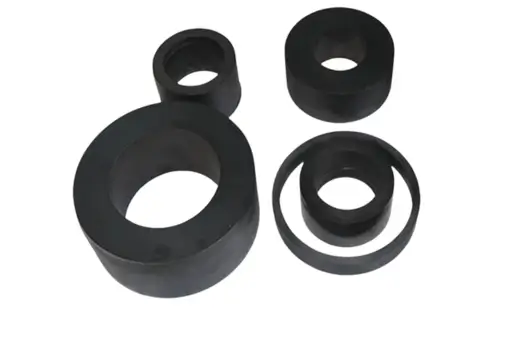
CF30 PEEK Tube (30% Carbon Fiber Reinforced PEEK)
Properties: Contains 30% carbon fiber reinforcement, significantly enhancing the rigidity, wear resistance, and compressive strength of the PEEK tube. The carbon fiber reinforcement also reduces the thermal expansion coefficient and improves material stability under high load conditions.
Applications: Suitable for high-load, high-pressure environments such as automotive engine components, aerospace structures, and precision mechanical parts.
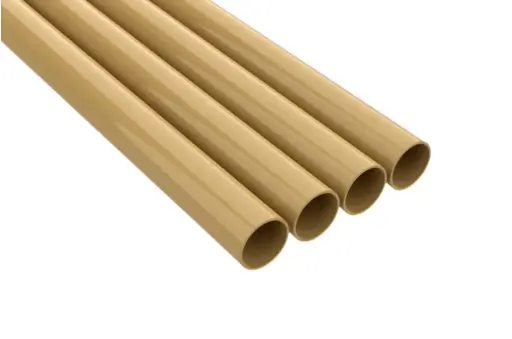
GF30 PEEK Tube (30% Glass Fiber Reinforced PEEK)
Properties: Contains 30% glass fiber, enhancing the material’s rigidity, strength, and temperature resistance. The glass fiber increases the compressive strength and dimensional stability of the PEEK tube, making it suitable for long-term use at high temperatures.
Applications: Used for components requiring high-temperature resistance, strong rigidity, and the ability to withstand large loads, such as seals, gaskets, and mechanical parts.
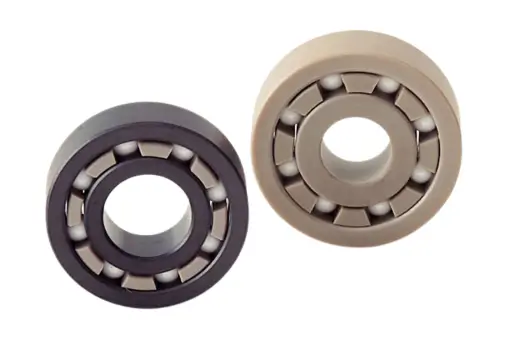
Bearing Grade PEEK (10% Graphite, 10% Carbon Fiber, 10% PTFE Reinforced)
Properties: Self-lubricating, high strength, high-temperature resistance (up to 250°C), excellent wear resistance, and chemical resistance.
Applications: Suitable for high-load, high-temperature, and non-lubricated environments. Widely used in bearings, sliding components, pumps, valves, automation equipment, and industrial parts requiring corrosion resistance and wear resistance.
Why Choose Our PEEK Tubes
Reliable supply, engineering-ready machining, certified production, and export support for demanding applications.
Stock & custom dimensions
Available in stock sizes and custom dimensions to match your project requirements.
Machining based on drawings
Support for custom cutting and machining according to your technical drawings and part requirements.
Certified manufacturing
Produced under certified manufacturing systems for quality consistency and dependable supply.
Fast quote & export support
Fast quotation response and export coordination support for global buyers and OEM projects.
Machining Methods for Allstar Material PEEK Rods
We use different manufacturing routes depending on tube size, wall thickness, geometry complexity, and dimensional requirements.
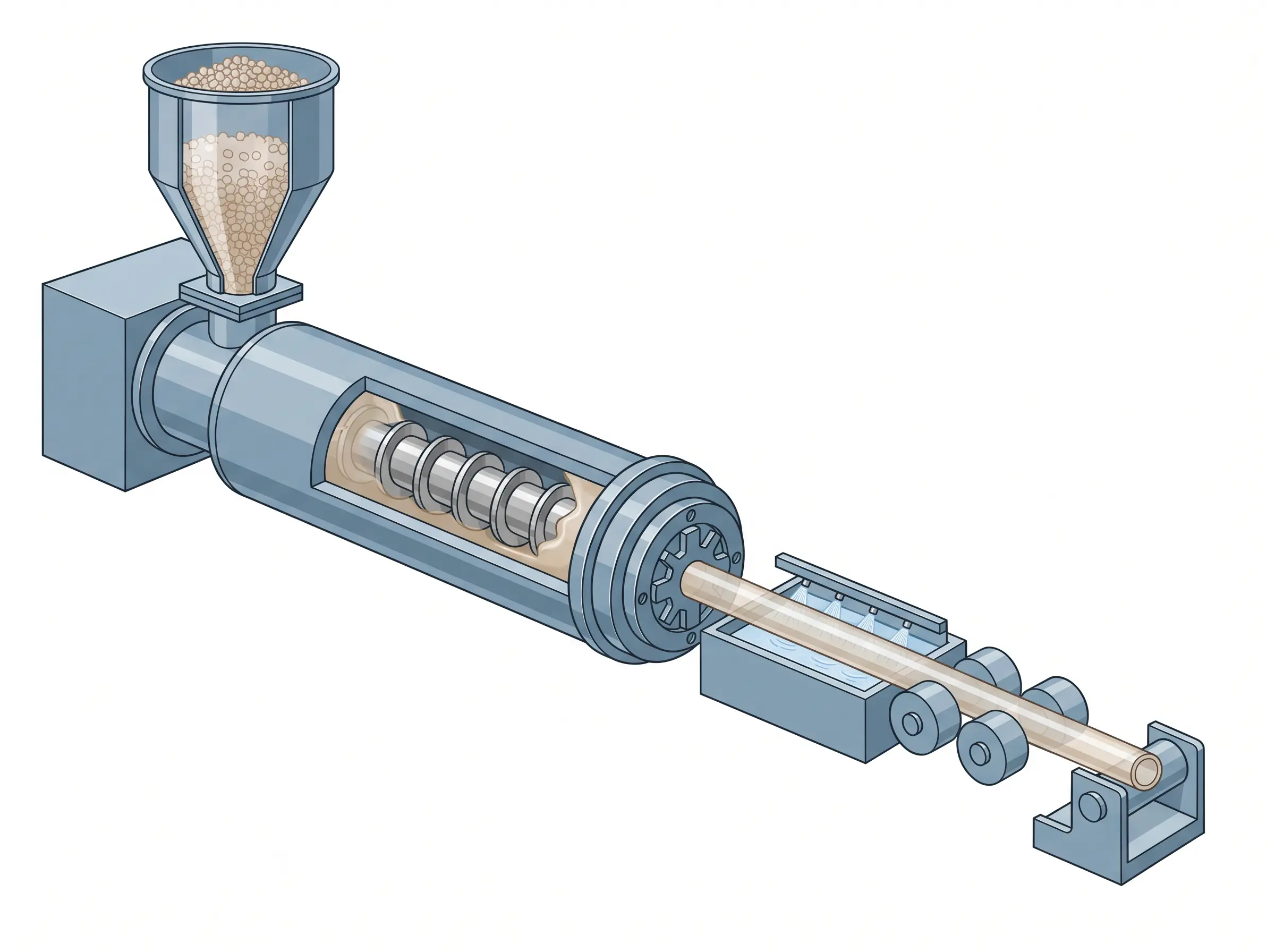
Extrusion
Extrusion became our go-to process after we solved the dimensional consistency challenges caused by PEEK’s narrow processing window. With tighter temperature control and stable line conditions, extrusion is ideal for continuous tube production.
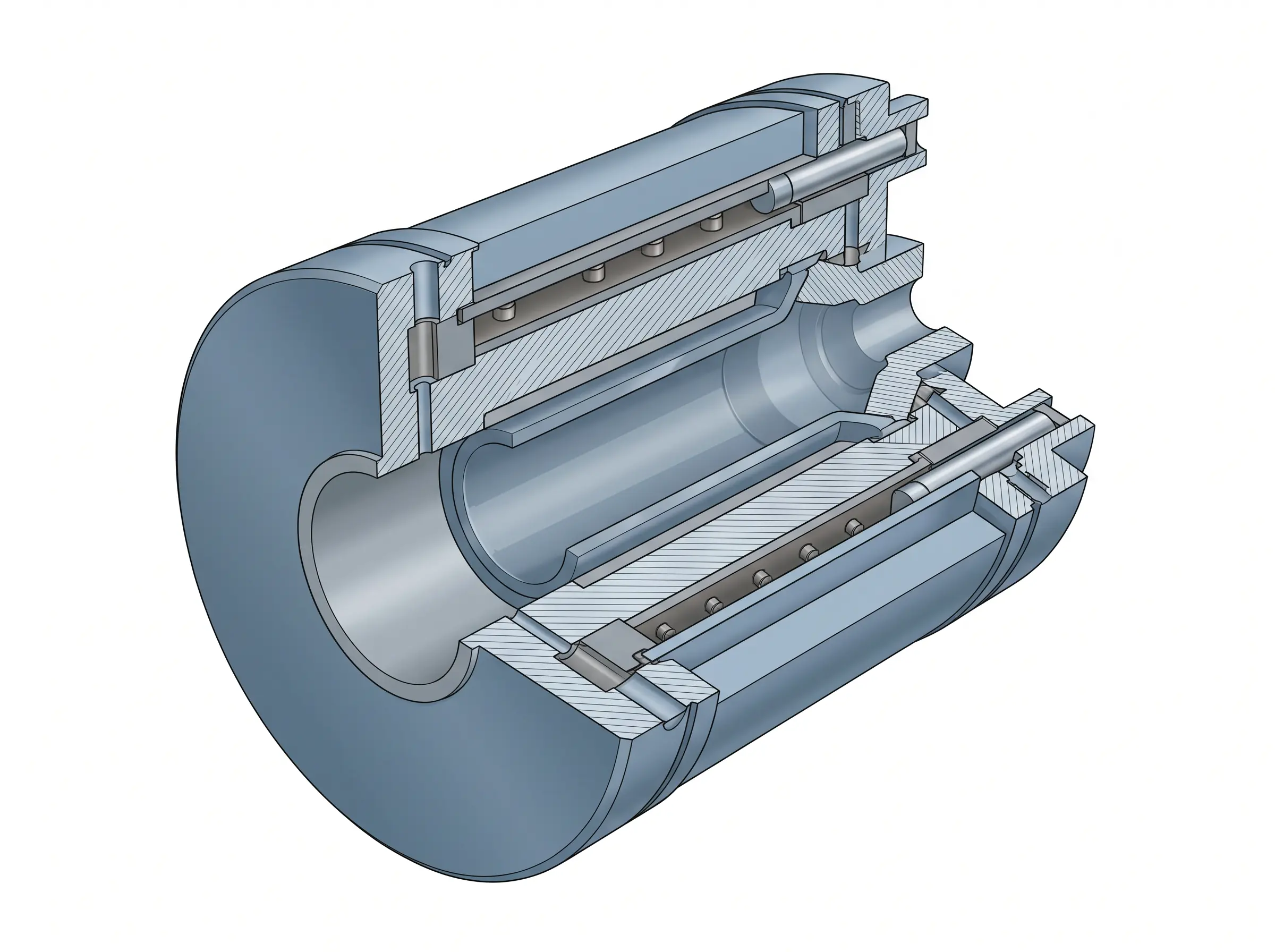
Compression Molding
We developed compression molding capability for tube sizes that are difficult to extrude consistently, especially large-diameter and thick-wall sections. This process is well suited for near-net-shape tube blanks that may also require secondary machining on critical dimensions.
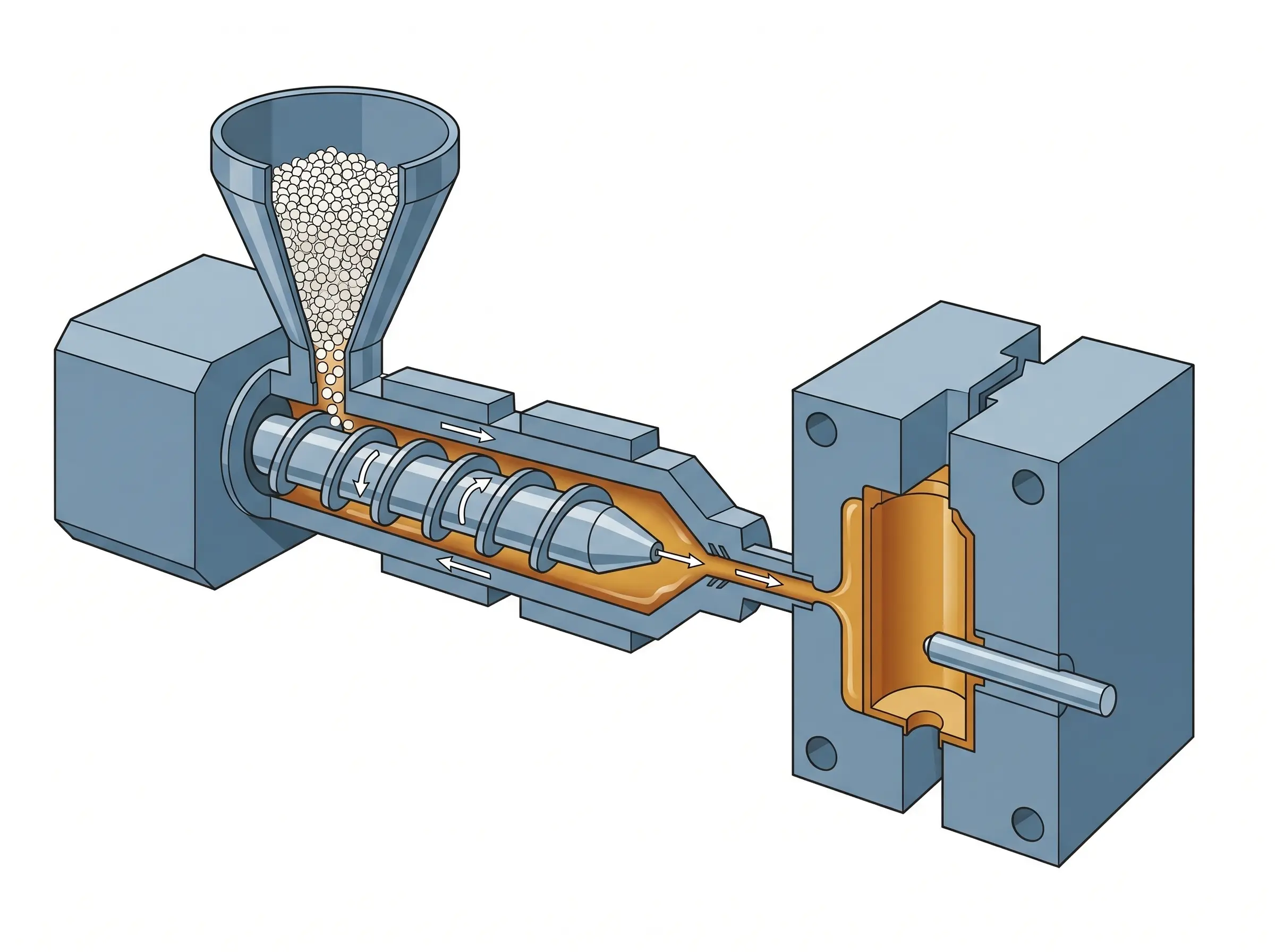
Injection Molding
Injection molding is suitable for tube-based components with integrated features such as flanges, threads, stepped diameters, or other complex details that would otherwise require expensive secondary operations if made from extruded stock.
Properties of Different Grades of PEEK Tubes
| Item | Material Grade | |||||
|---|---|---|---|---|---|---|
| Pure PEEK | GF30 PEEK | CF30 PEEK | Bearing grade PEEK | |||
| Test Standard or Instrument | Unit | 100%PEEK | PEEK+30%Glass Fiber | PEEK+30%Carbon Fiber | PEEK+10%Carbon Fiber+10%Graphite+10%PTFE | |
| Tensile strength(23°C) | ISO527 | MPa | 100 | 155 | 220 | 134 |
| Bending strength(23°C) | ISO 178 | MPa | 163 | 212 | 298 | 186 |
| Compressive strength(23°C) | ISO 604 | MPa | 118 | 215 | 240 | 150 |
| Lzod impact strength( no gap) | ISO 180/IU | kJ/m² | No Crack | 51 | 46 | 32 |
| Item | Material Grade | |||||
|---|---|---|---|---|---|---|
| Pure PEEK | GF30 PEEK | CF30 PEEK | Bearing grade PEEK | |||
| Test Standard or Instrument | Unit | 100%PEEK | PEEK+30%Glass Fiber | PEEK+30%Carbon Fiber | PEEK+10%Carbon Fiber+10%Graphite+10%PTFE | |
| Melting point | DSC 11357 | °C | 343 | 343 | 343 | 343 |
| Distortion temperature | ISO 75-1/2 | °C | 163 | 315 | 315 | 293 |
| Continuous using temperature | UL 74685 | °C | 260 | 260 | 260 | 260 |
| Coefficient of thermal expansion | ASTM D696 | 10 -5°C | 4.7 | 2.2 | 1.5 | 2.2 |
| Flammable level | UL 94 | V-0@mm | 1.5 | 1.5 | 1.5 | 0.75 |
| Item | Material Grade | |||||
|---|---|---|---|---|---|---|
| Pure PEEK | GF30 PEEK | CF30 PEEK | Bearing grade PEEK | |||
| Test Standard or Instrument | Unit | 100%PEEK | PEEK+30%Glass Fiber | PEEK+30%Carbon Fiber | PEEK+10%Carbon Fiber+10%Graphite+10%PTFE | |
| Dielectric strength | IEC 60243-1 | kV/mm | 18 | 19 | ||
| Dielectric constant | IEC60250 | – | 3.2 | 3.3 | ||
| Surface resistivity | Ω | 1015 | 1015 | 3*106 | 5*106 | |
| Item | Material Grade | |||||
|---|---|---|---|---|---|---|
| Pure PEEK | GF30 PEEK | CF30 PEEK | Bearing grade PEEK | |||
| 100%PEEK | PEEK+30%Glass Fiber | PEEK+30%Carbon Fiber | PEEK+10%Carbon Fiber+10%Graphite+10%PTFE | |||
| Test Standard or Instrument | Unit | |||||
| Density | ISO 1183 | g/cm³ | 1.3±0.01 | 1.5±0.01 | 1.4±0.01 | 1.43±0.01 |
| Rockwell hardness | ISO 2039 | HRR | 118 | 119 | 121 | 108 |
| Friction coefficient | μ | 0.30-0.38 | 0.38-0.46 | 0.28 | 0.18 | |
| Water Abs. (25°C.24Hrs) | ISO 62 | % | 0.5 | 0.11 | 0.06 | 0.06 |
| Mould shrinking percentage | 3mm,170°C, Flow direction | % | 1.2 | 0.4 | 0.1 | 0.3 |
| Perpendicular to flow direction | % | 1.5 | 0.8 | 0.5 | 0.5 | |
Allstar Material PEEK tubes stock specifications
Standard Size Ranges Available:
- Outer Diameter: 20-300mm (stock sizes)
- Inner Diameter: 12-280mm
- Wall Thickness: 2-50mm
- Standard Length: 3000mm (custom lengths available)
PEEK Tubes vs Aluminum, 304 Stainless Steel and PTFE Tubes
Select the property you want to compare. This accordion module keeps the page clean while letting buyers check the exact performance they care about.
| Property | PEEK | Aluminum 6061 | 304 Stainless Steel | PTFE |
|---|---|---|---|---|
| Tensile Strength | 100 MPa (Pure) 155 MPa (GF30) 220 MPa (CF30) |
310 MPa | 510–620 MPa | 22 MPa |
| Structural Rigidity | Medium to high | Medium to high | Highest | Lowest |
| Best Use | Engineered plastic structural parts | Lightweight metal structures | Heavy-duty structural applications | Low-load tubing |
| Property | PEEK | Aluminum 6061 | 304 Stainless Steel | PTFE |
|---|---|---|---|---|
| Continuous Service Temperature | 260°C | Strength drops at about 200–250°C | Higher-temperature metal service range | 260°C |
| Melting Point / Thermal Limit | 343°C | 588°C | 1673–1723 K melting range | Usually selected by service temperature |
| Best Use | High-temperature insulating parts | General industrial tubing | High-temperature structural service | Corrosive high-temperature fluid handling |
| Property | PEEK | Aluminum 6061 | 304 Stainless Steel | PTFE |
|---|---|---|---|---|
| Electrical Behavior | Insulating | Conductive | Conductive | Excellent insulating |
| Dielectric Strength | 18–19 kV/mm | — | — | 80 kV/mm |
| Resistivity | Up to 10^15 Ω | — | 65–77 × 10^-8 Ω·m | 10^16 |
| Material | Chemical Resistance Summary | Selection Note |
|---|---|---|
| PEEK | Excellent resistance to many acids, alkalis, solvents and steam | Best when chemical resistance and structural strength are both required |
| Aluminum 6061 | Good in many environments, but limited in some aggressive chemicals | Choose mainly for lightweight structure, not harsh chemistry |
| 304 Stainless Steel | Good corrosion resistance, but not ideal for every strong acid environment | Good general-purpose industrial corrosion performance |
| PTFE | Outstanding chemical resistance | Best for highly aggressive media when load-bearing is less important |
| Property | PEEK | Aluminum 6061 | 304 Stainless Steel | PTFE |
|---|---|---|---|---|
| Density | 1.30 g/cm³ | 2.70 g/cm³ | 7.85–8.06 g/cm³ | 2.15 g/cm³ |
| Thermal Conductivity | 0.29 W/m·K | 167 W/m·K | 14–17 W/m·K | 0.20 W/m·K |
| Selection Meaning | Lightweight and insulating | Lightweight and excellent heat transfer | Heavy but strong | Light but not structural |
| If you need… | Recommended Material | Why |
|---|---|---|
| Heat + insulation + chemical resistance | PEEK | Best engineered balance of performance |
| Lightweight metal + heat transfer | Aluminum 6061 | Excellent thermal conductivity and fabrication ease |
| Maximum strength + rigidity | 304 Stainless Steel | Best structural load capability |
| Extreme chemical resistance + low friction | PTFE | Best for aggressive media and low-friction use |
When to Choose the PEEK Tube Material
PEEK tubes are the preferred choice when standard plastics cannot handle the environment and metal tubes create weight, corrosion, or electrical insulation challenges.
High Temperature
Choose PEEK tubes when the application requires stable performance at elevated temperatures.
Electrical Insulation
Use PEEK tubes when metal is not suitable because the system requires electrical insulation.
Chemical Exposure
Select PEEK tubes for demanding environments involving chemicals, solvents, or aggressive media.
Weight Reduction
PEEK tubes are a strong option when the design needs lower weight than metal alternatives.
Precision Components
Choose PEEK tubes when the part requires machining, dimensional stability, or engineered features.
Critical Industries
PEEK tubes are commonly selected for medical, semiconductor, analytical, and high-performance industrial systems.
If your application needs to balance heat resistance, insulation, chemical durability, low weight, and mechanical performance, PEEK tubes are often the right solution.
Need a Quote or Want to Send Your Drawing?
Contact our team for stock sizes, custom dimensions, machining support, or drawing-based quotation.
RFQ Support
Ask for stock size, custom tube dimensions, or machining assistance.
Drawing Review
Send your part drawing by email for technical review and quotation.
