Petrochemical
High-temperature/pressure pump & compressor shaft seals; crude-oil erosion resistant. Verified service life > 12,000 h at 180 °C / 20 MPa.


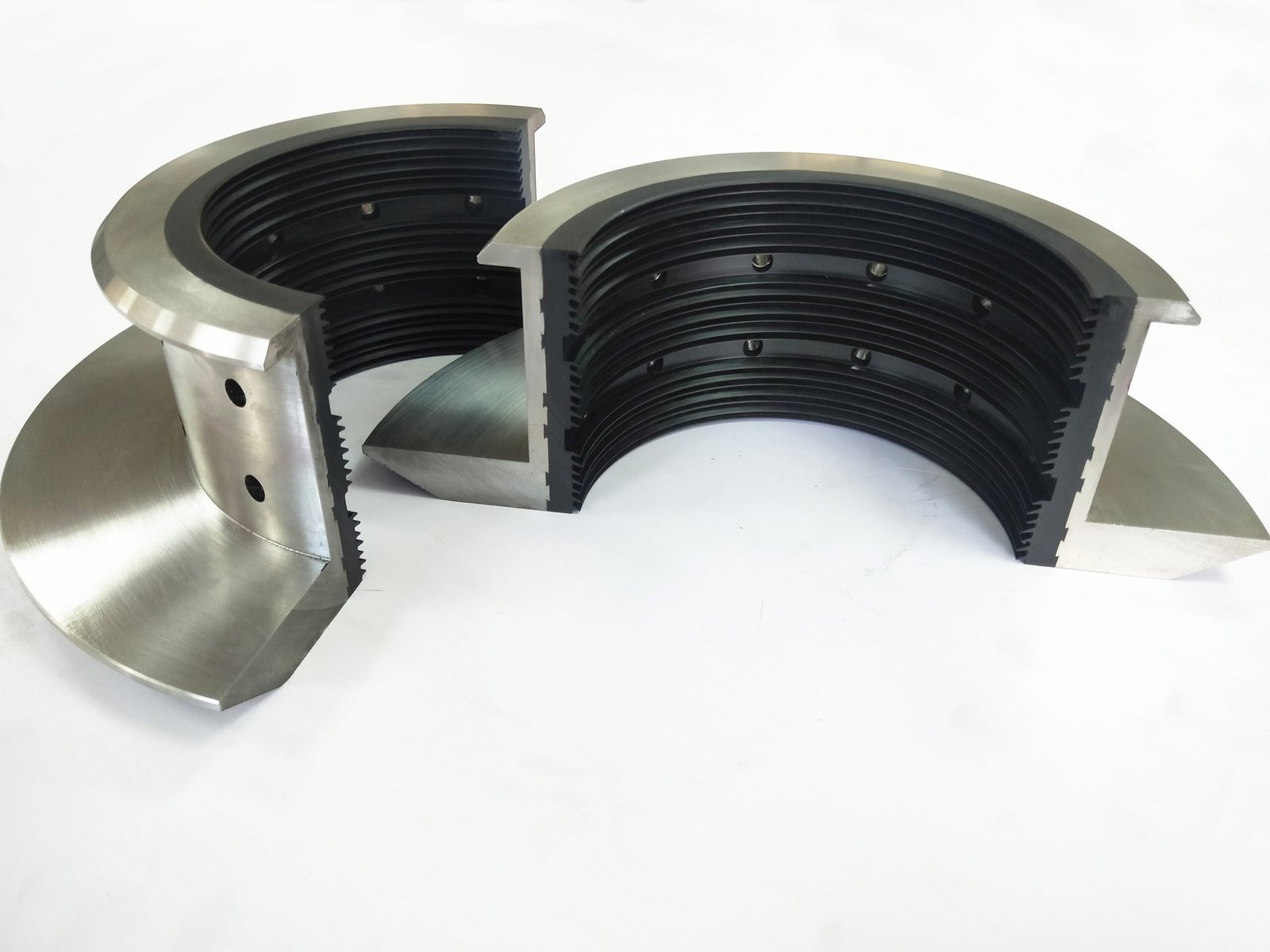
The PEEK Shaft End Composite Seal is a high-performance, dual-structure sealing solution designed to provide reliable shaft-end protection for critical equipment in demanding environments.
Key Features & Advantages:
Premium Material: Constructed from high-purity PEEK polymer, independently developed by Dalian Allstar Material.
Precision Machining: Engineered with strict dimensional accuracy (±0.03mm) and an optimal surface finish (Ra≤0.4μm).
Advanced Dual Design: The combination of a primary seal ring and a backup ring effectively compensates for installation deviations.
Extended Lifespan: Delivers a service life 3 to 5 times longer than traditional sealing components.
Extreme Applications: Excels in challenging conditions, including high-speed rotation, high-pressure fluctuations, and chemically corrosive environments.
Core Performance & Technical Parameters
| Property | Value | Test Standard / Condition |
|---|---|---|
| Continuous Operating Temperature | −60 °C ~ +260 °C | UL 746B (RTI, Mechanical with Impact) |
| Peak Temperature (short-term, < 5 min) | +300 °C | Intermittent, non-loaded |
| Static Pressure Capacity | ≤ 40 MPa | Radial clearance ≤ 0.05 mm, 23 °C |
| Dynamic Pressure Capacity | ≤ 25 MPa | v ≤ 10 m/s, lubricated |
| Linear Velocity | ≤ 15 m/s (standard) · ≤ 20 m/s (CF-reinforced) | Internal PV chart, correlated with ISO 6194-1 |
| Friction Coefficient — Pure PEEK | 0.34 – 0.40 (dry) · 0.10 – 0.15 (lubricated) | ASTM D3702, pin-on-disc |
| Friction Coefficient — 30 % CF PEEK | 0.15 – 0.20 (dry) · 0.08 – 0.12 (lubricated) | ASTM D3702, pin-on-disc |
| Tensile Strength — Pure PEEK | ≥ 95 MPa | ISO 527-2, 23 °C, 5 mm/min |
| Tensile Strength — 30 % CF PEEK | ≥ 210 MPa | ISO 527-2, 23 °C, 5 mm/min |
| Compressive Creep (24 h @ 150 °C, 10 MPa) | ≤ 3 % | ISO 899-2 / ASTM D621 |
| Hardness (bulk material) | Rockwell M99 (Scale M) | ISO 2039-2 / ASTM D785 |
| Mating Shaft Surface Hardness (required) | ≥ HRC 45 | Applies to counter-face, not to the seal |
| Chemical Resistance | Resistant to dilute H₂SO₄ (≤ 40 %) at 23 °C, dilute bases, hydrocarbons, steam & 200+ industrial media | ISO 175, 30 d immersion |
| Dimensional Range | Shaft Ø 10 – 300 mm · Groove depth 1.5 – 8 mm | Tolerance grade h8 / h9 |
Note: Concentrated H₂SO₄ (≥ 95 %) and oleum will attack the PEEK backbone at elevated temperature — contact engineering for chemistry-specific validation.
High-temperature/pressure pump & compressor shaft seals; crude-oil erosion resistant. Verified service life > 12,000 h at 180 °C / 20 MPa.
Ultrapure water & CVD equipment. Low-outgassing grade per SEMI F57; extractable ionic content < 1 ppb; compatible with ISO 14644-1 Class 4 environments.
Compliant with FDA 21 CFR 177.2415, EU 10/2011 and NSF/ANSI 51. Suitable for aseptic filling machines and bioreactor shaft ends.
Hydraulic actuators and fuel-pump shaft seals; qualified through −60 °C ~ +260 °C thermal-cycle tests per MIL-G-5514G and SAE ARP 1383.
Critical sealing component for lithium-battery electrolyte transfer pumps and hydrogen fuel-cell circulation loops.
Causes: Stretch > 15 %, roughness > Ra 0.8 µm, particulates > 50 µm.
Remedies: Verify h8/h9 tolerance, polish to Ra 0.4 – 0.6 µm, install ≤ 25 µm filter upstream.
Causes: Dry-run > 280 °C, compression > 25 %, cooling loss.
Remedies: Adjust compression to 15 – 20 %, inspect lubricant, restore cooling flow.
Causes: Radial clearance > 0.5 mm combined with frequent pressure surges.
Remedies: Reduce clearance to < 0.2 mm, add anti-extrusion back-up ring.
Selection Prerequisites: Counter-face roughness ≤ Ra 0.8 µm · Mating shaft hardness ≥ HRC 45 · Chamfer 0.3 × 45°. Engineering response within 24 hours.
PEEK operates continuously from −60 °C to +260 °C, retains structural strength under aggressive chemistry (e.g. dilute H₂SO₄, 200+ media), and exhibits roughly one-tenth the compressive creep of fluoroelastomers, delivering 3 – 5× the mechanical strength.
Pure PEEK suits low-speed service (< 10 m/s) where toughness is critical. 30 % CF-PEEK offers ~40 % higher rigidity, ~3× wear resistance and higher tensile strength (≥ 210 MPa), ideal for high-speed rotation and elevated PV loads.
Yes. Instantaneous surges up to 1.5× working pressure (< 100 ms) are tolerated, provided the peak stays below the static 40 MPa limit. For repeated shocks (> 10 events/min), a hydraulic accumulator is recommended to protect the seal lip.
Dalian Allstar Material delivers Victrex-/Solvay-grade performance at 60 – 70 % of imported cost, with ~50 % shorter lead time and localised 24-hour engineering support.
Contact our technical team today for a professional quote and technical support.
Please fill out the form below, and our team will get back to you shortly.
WhatsApp us