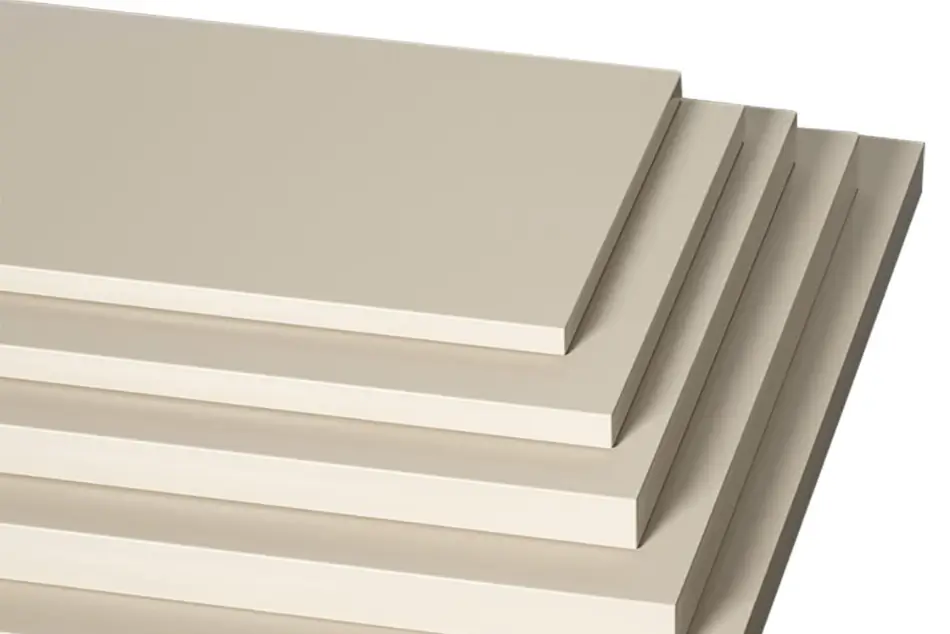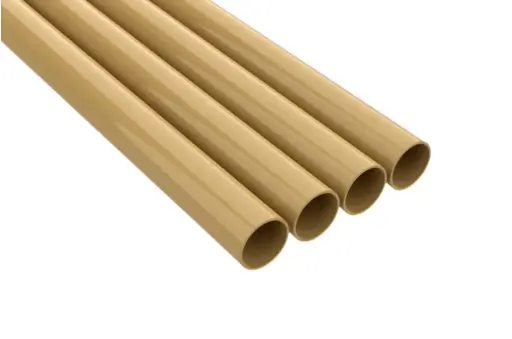
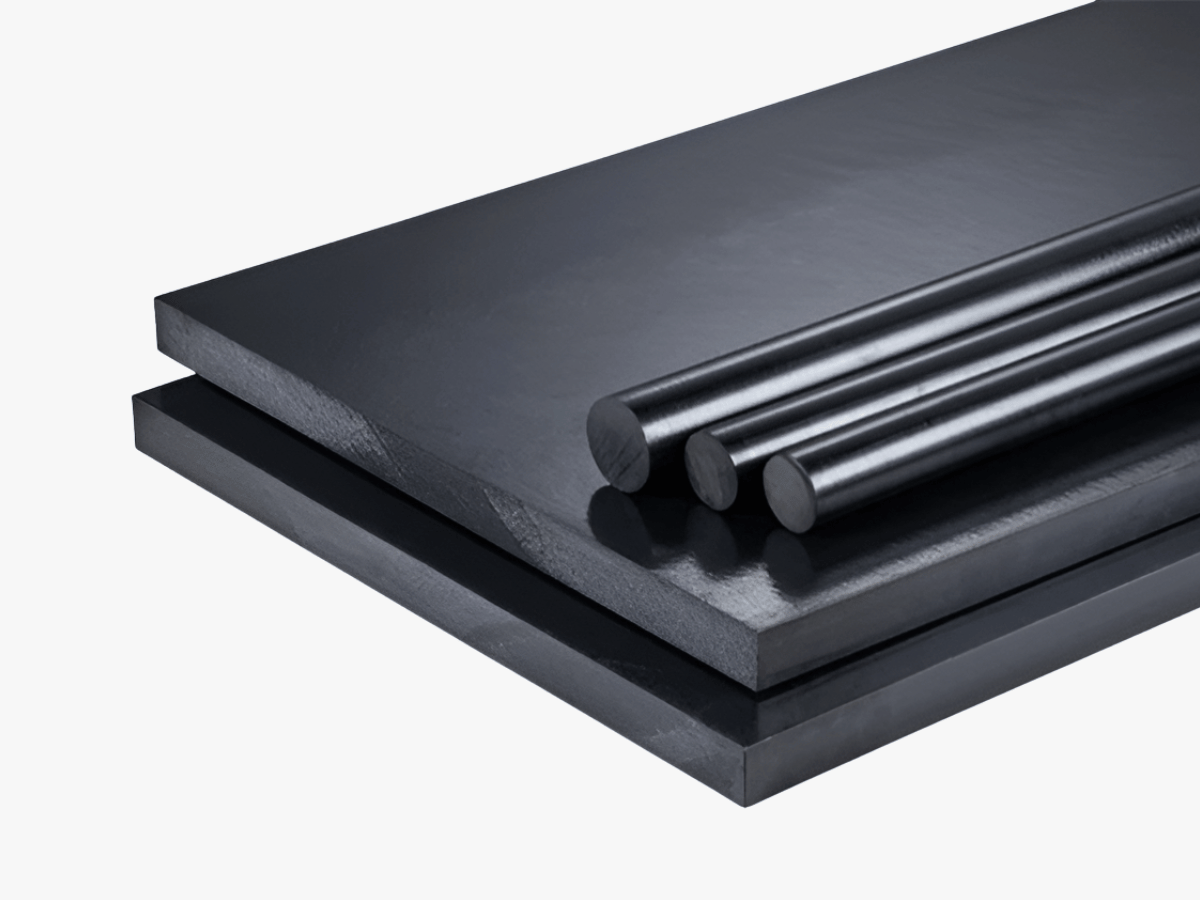
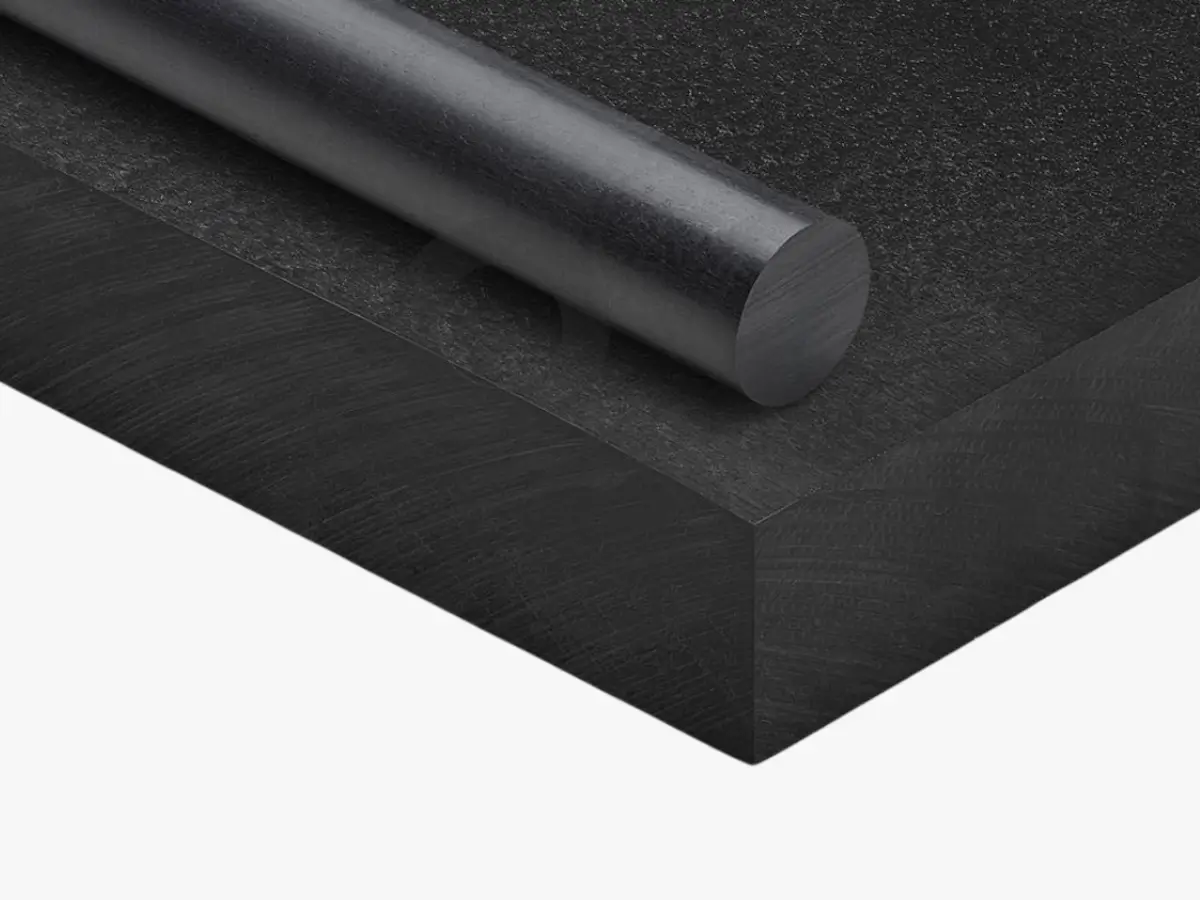
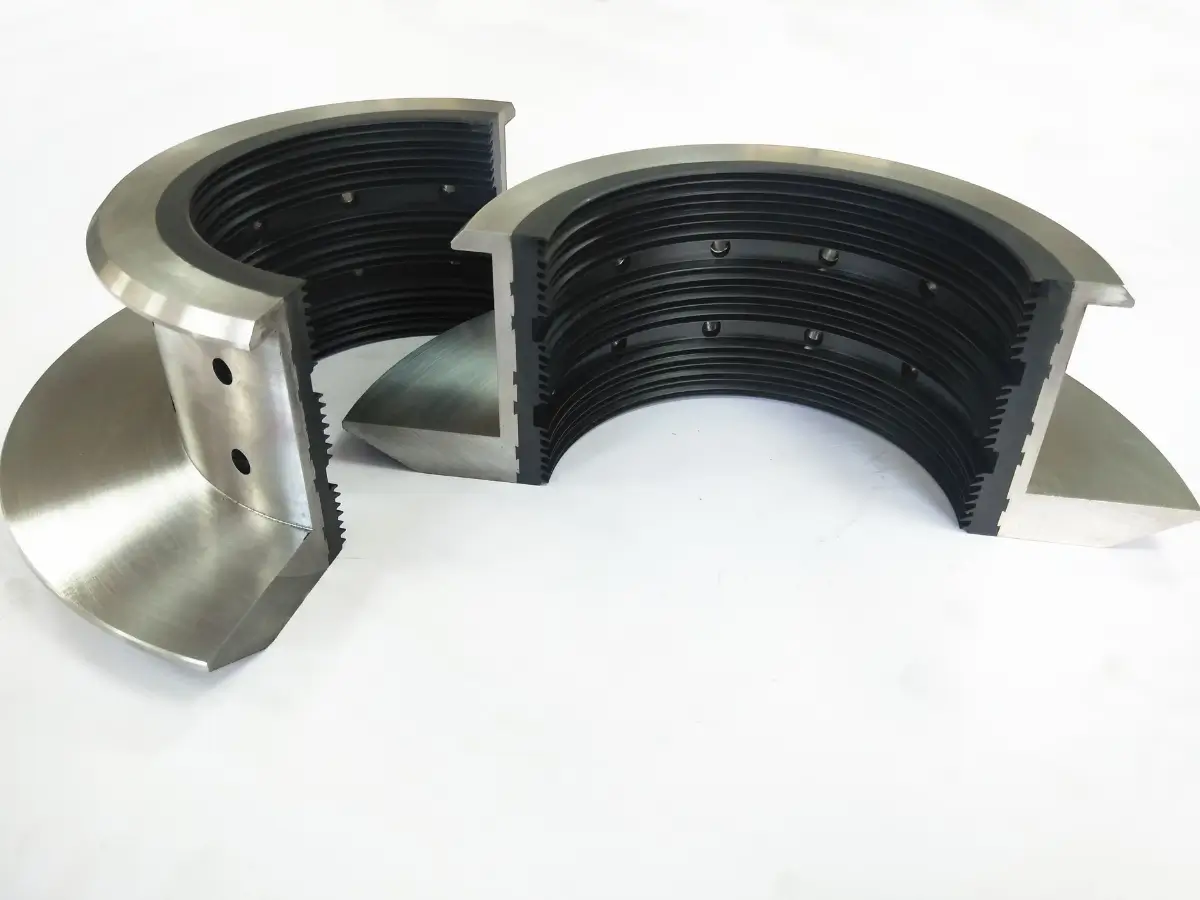
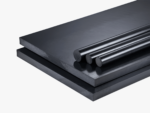
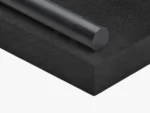
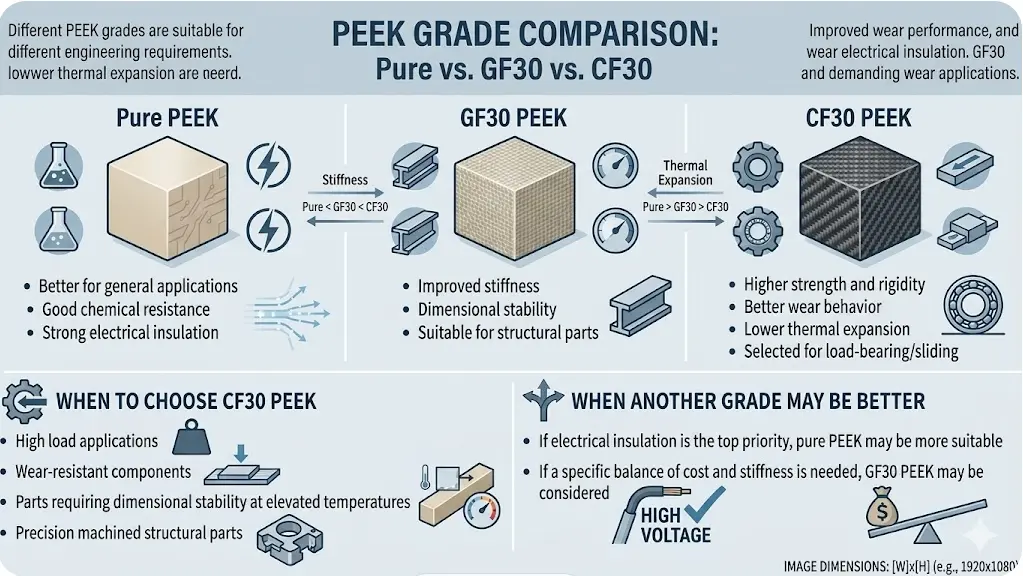
Different PEEK grades are suitable for different engineering requirements. CF30 PEEK is generally chosen when higher stiffness, improved wear performance, and lower thermal expansion are needed. Pure PEEK is often preferred for more general-purpose use and applications requiring stronger electrical insulation. GF30 PEEK can offer good rigidity and dimensional stability, while CF30 PEEK is often preferred for higher mechanical performance and demanding wear applications.
General comparison:
- Pure PEEK: Better for general engineering applications, good chemical resistance, strong electrical insulation
- GF30 PEEK: Improved stiffness and dimensional stability, suitable for structural parts
- CF30 PEEK: Higher strength and rigidity, better wear behavior, lower thermal expansion, often selected for load-bearing or sliding applications
When to choose CF30 PEEK:
- High load applications
- Wear-resistant components
- Parts requiring dimensional stability at elevated temperature
- Precision machined structural parts
When another grade may be better:
- If electrical insulation is the top priority, pure PEEK may be more suitable
- If a specific balance of cost and stiffness is needed, GF30 PEEK may be considered
CF30 PEEK is widely used in high-load, high-temperature, and wear-critical applications where dimensional stability and mechanical strength are essential. Compared with unfilled PEEK, carbon fiber reinforced PEEK is often selected for structural components, sliding parts, and precision machined parts operating in demanding industrial environments.
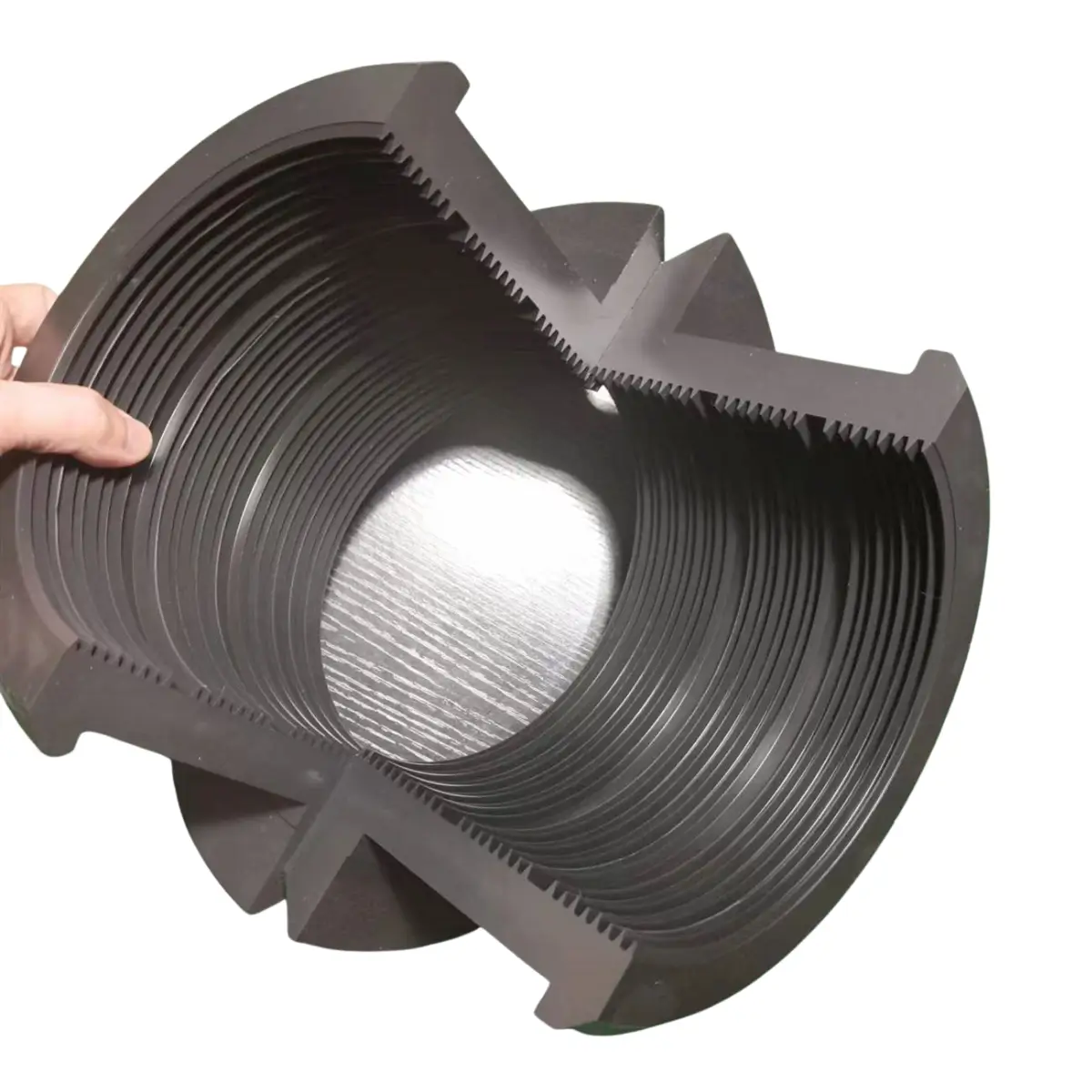
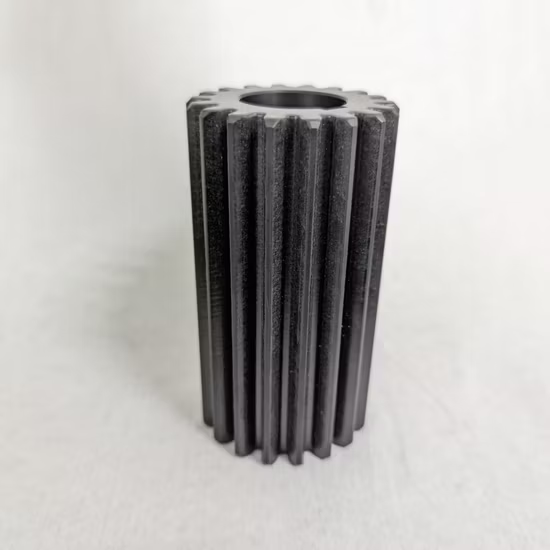
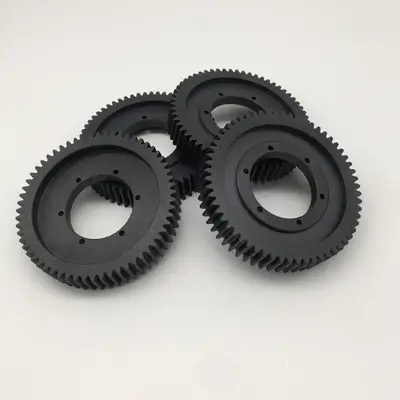
Typical component applications include:
- Wear rings
- Bushings and bearings
- Valve seats and seal rings
- Pump and compressor components
- Structural brackets
- Semiconductor fixtures
- Aerospace support and insulation parts
- High-performance electrical and mechanical assemblies
Industries commonly using CF30 PEEK:
- Oil & gas
- Semiconductor
- Aerospace
- Automotive
- Electronics
- Chemical processing
- Industrial equipment manufacturing
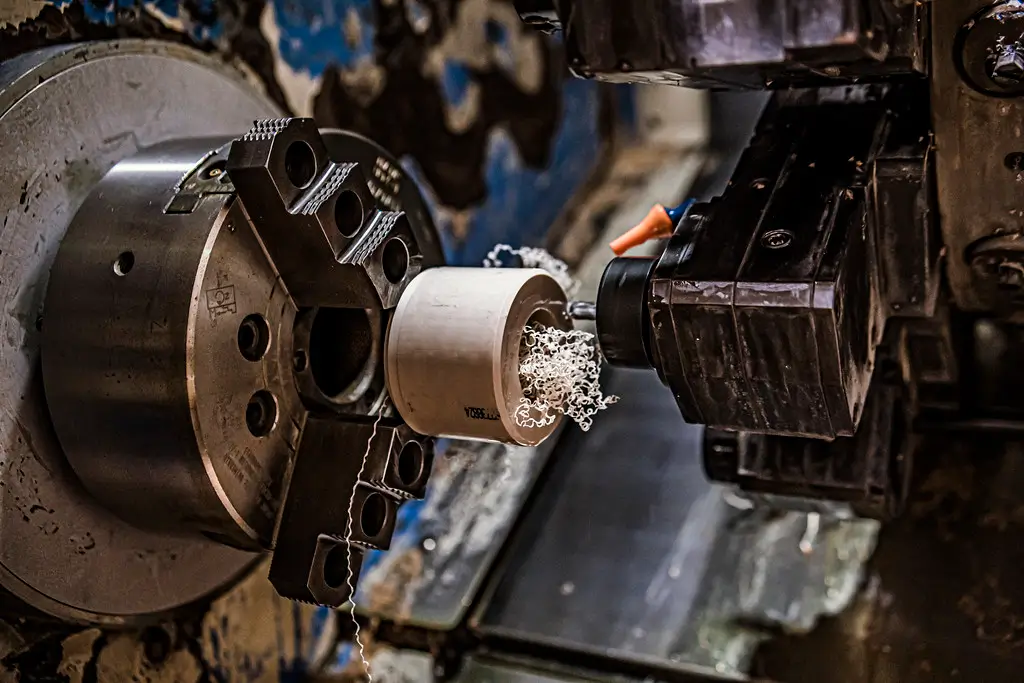
Because CF30 PEEK contains 30% carbon fiber reinforcement, it provides excellent stiffness and dimensional stability, but it also requires appropriate machining strategies. Compared with unfilled grades, carbon fiber reinforced PEEK is more abrasive to tooling and should be processed with suitable cutting parameters and tool materials.
Important considerations include:
- Carbide or PCD tooling is recommended for improved tool life
- CF30 PEEK is suitable for precision machined components with tight tolerances
- It performs well in wear applications and structural parts under load
- Material selection should consider load direction, temperature, friction conditions, and dimensional stability requirements
- Surface finish, machining allowance, and final tolerance should be evaluated based on end-use application
Recommended note:
For critical components, we recommend discussing part geometry, tolerances, and operating environment before production.