
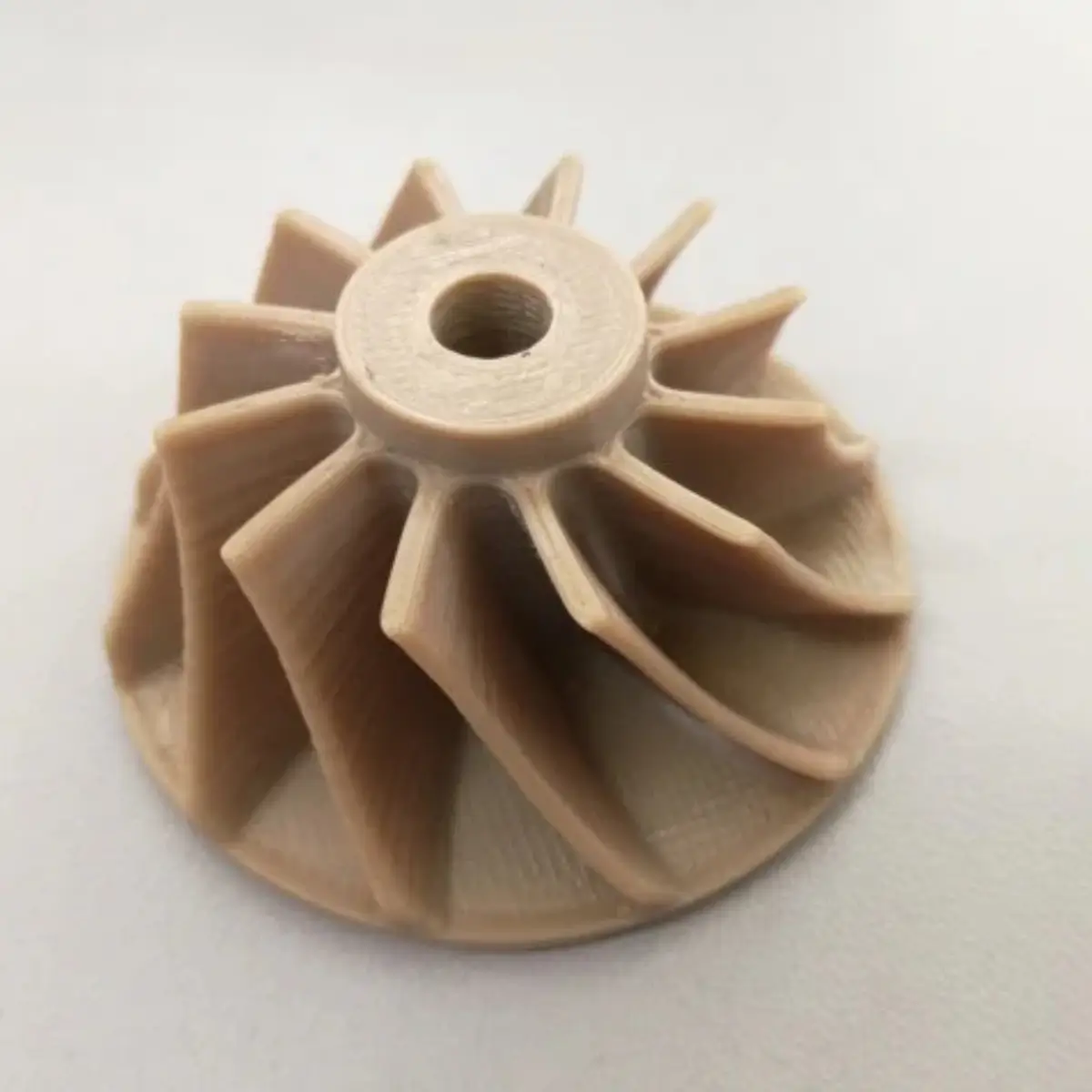
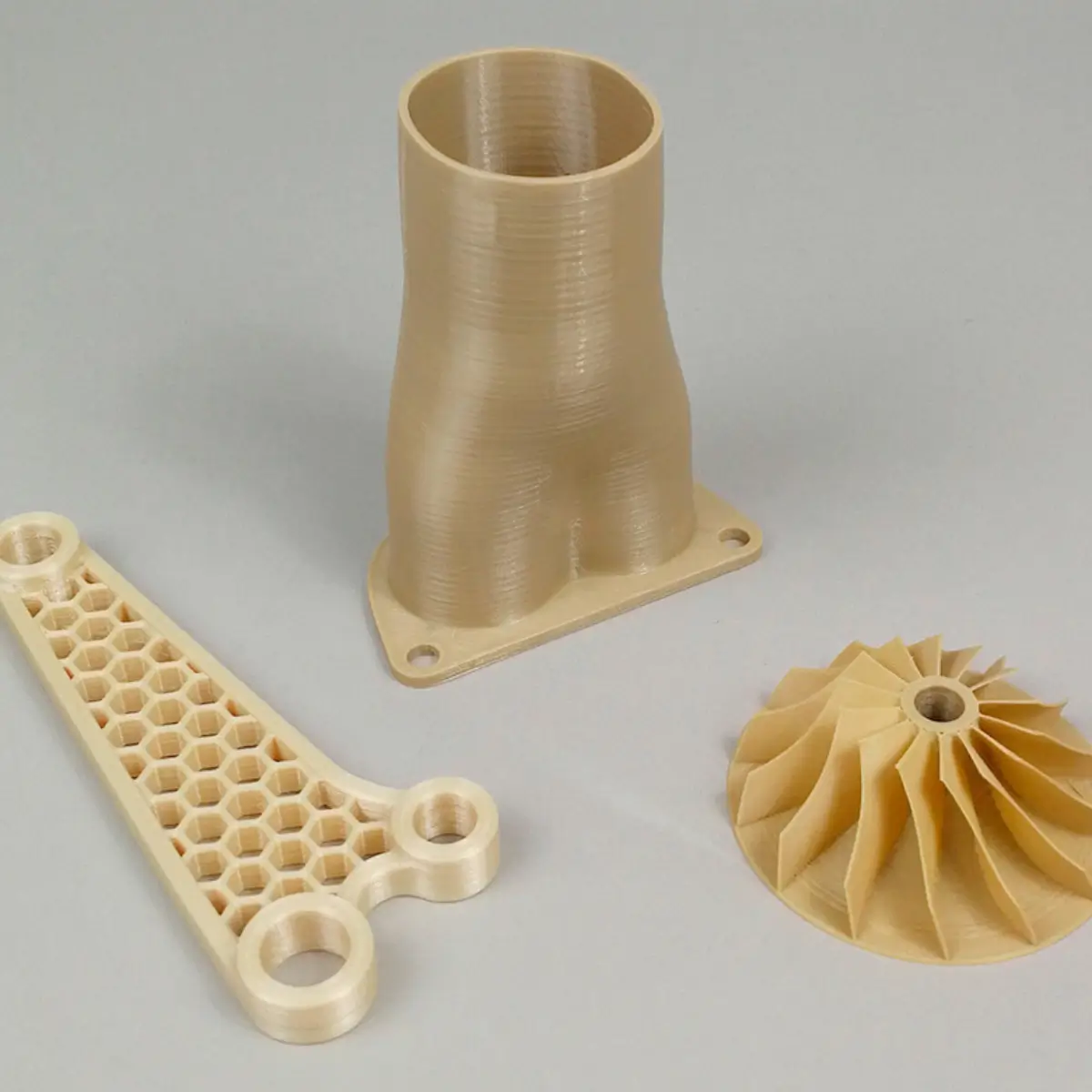
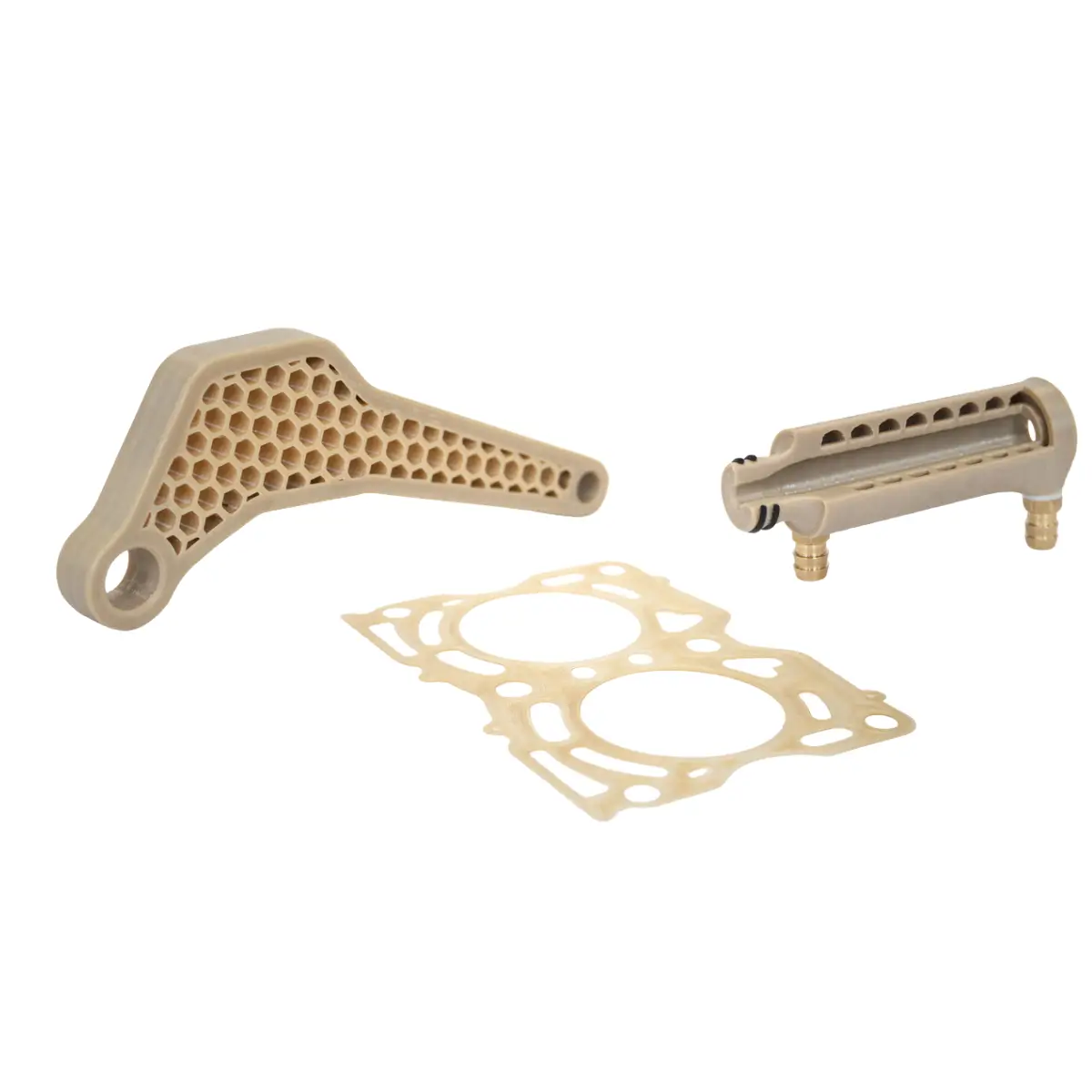
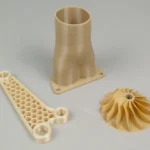
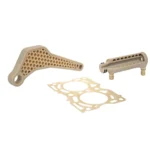
Advantages of PEEK 3D Printing
Exceptional High-Temperature Performance
PEEK can operate stably at 260°C for long-term use and withstand short-term temperatures exceeding 300°C, making it ideal for engines, aerospace, and oil & gas equipment under harsh conditions.
Metal-Level Strength with Lighter Weight
Compared to metal parts, PEEK 3D printed components maintain strength and rigidity while significantly reducing weight, achieving true lightweight design.
Comprehensive Chemical Resistance
PEEK can easily withstand acids, bases, and organic solvents, demonstrating high reliability in chemical, medical, and energy applications.
Wear Resistance and Self-Lubrication
Using bearing grade PEEK (formulated with graphite, carbon fiber, and PTFE), printed parts feature low friction and long service life, making them highly suitable for high-speed motion and friction applications.
High Design Flexibility
The 3D printing process can accommodate various complex part designs, enabling rapid delivery and short modification cycles.
Dimensional Stability
PEEK 3D printed parts maintain excellent dimensional accuracy and stability even under high-temperature or harsh environments.
PEEK 3D Printing vs. Other Materials
PEEK 3D Printing vs. PEI
Temperature Resistance: PEEK can be used continuously at up to 260°C, significantly higher than PEI (around 170°C). PEEK is more reliable in high-temperature environments such as aerospace or automotive engine compartments.
Mechanical Performance: PEEK offers higher strength and rigidity, suitable for high-load structural components, while PEI is better suited for lightweight or moderate-strength parts.
Chemical Stability: PEEK is almost unaffected by most chemicals, whereas PEI performs poorly in some strong solvents or oils.
Cost: PEI filament is cheaper and suitable for budget-conscious engineering applications; PEEK is a high-end material with higher cost but superior performance.
Summary: For high-temperature, high-strength, and extreme environment stability, PEEK is the better choice; for cost-effective applications, PEI may be an alternative.
PEEK 3D Printing vs. Metal 3D Printing
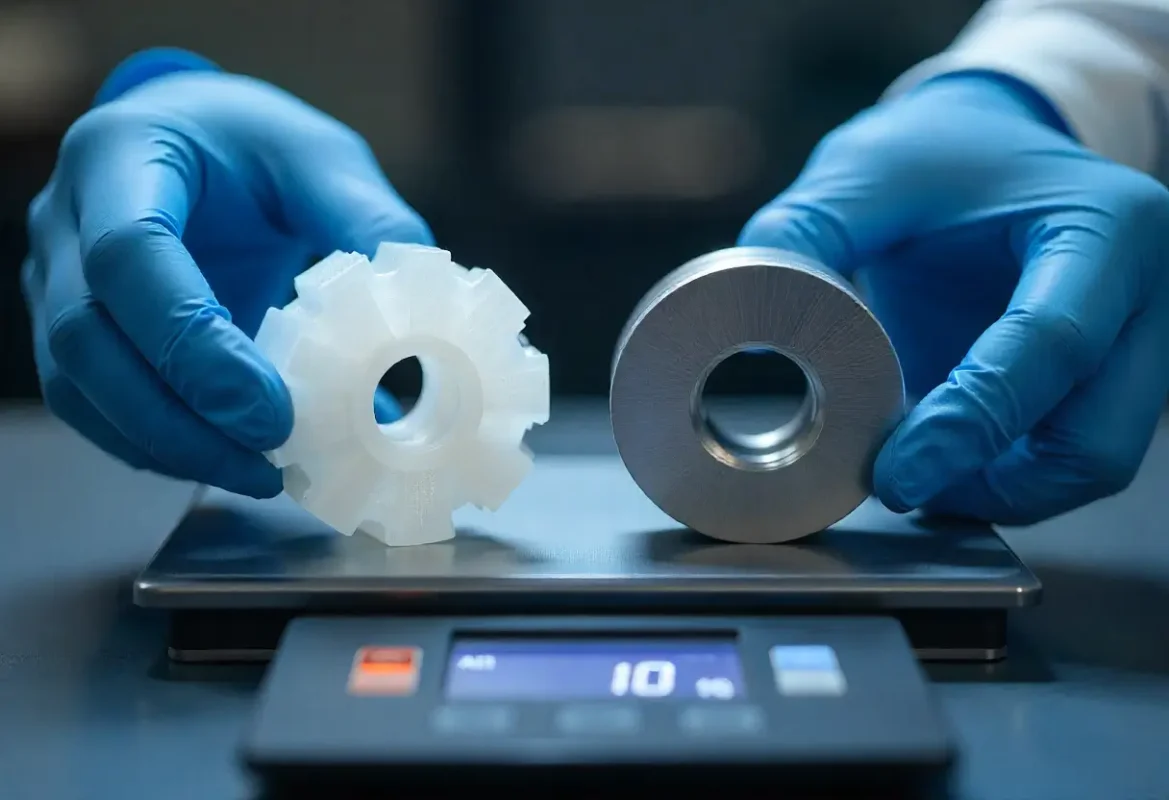
Weight Advantage: PEEK has a density of about 1.3 g/cm³, only 1/6 of steel, significantly reducing weight while maintaining strength, ideal for aerospace and medical applications.
Corrosion Resistance: Metals are prone to corrosion and require additional protection; PEEK naturally has excellent chemical and corrosion resistance.
Processing Difficulty: Metal 3D printing (e.g., laser melting) involves expensive equipment, high energy consumption, and complex maintenance; PEEK 3D printing requires lower-cost equipment and is easier to operate.
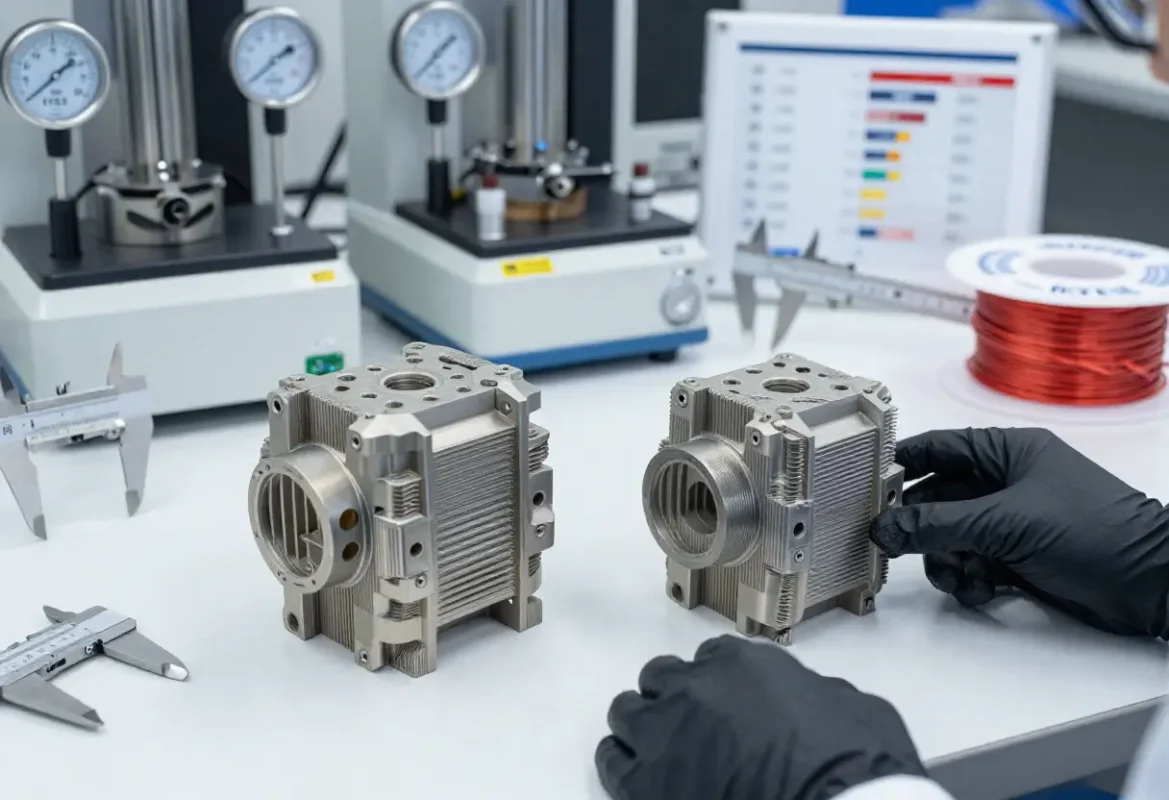
Performance Differences: Metals still outperform PEEK in strength, rigidity, and wear resistance, but PEEK has advantages in lightweight design and corrosion resistance.
Summary: PEEK is not a complete replacement for metals, but in scenarios requiring lightweight + high performance + corrosion resistance, it is an ideal alternative to metal printing.
Cost vs. Performance Balance
Material Cost: PEEK filament is more expensive than common thermoplastics like PEI, PA, or ABS, but far less costly than metal 3D printing powders.
Equipment Investment: PEEK printers require high-temperature nozzles and enclosed chambers, costing more than standard FDM printers but still less than metal 3D printers.
Overall Value: Compared to metal printing, PEEK offers advantages in lightweight design, corrosion resistance, and biocompatibility, while also reducing manufacturing cycles.
Application Selection:
Budget-conscious & medium-to-high performance → Choose PEI
Extreme conditions & high performance → Choose PEEK
Ultra-high strength & rigidity → Choose metal
Technical Parameter Comparison of PEEK 3D Printing Filaments
| Parameter | Unfilled PEEK | CF30 PEEK (Carbon Fiber Reinforced) | GF30 PEEK (Glass Fiber Reinforced) | Bearing Grade PEEK (Graphite + Carbon Fiber + PTFE) |
|---|---|---|---|---|
| Melting Point | ~343°C | ~343°C | ~343°C | ~343°C |
| Glass Transition Temperature (Tg) | ~143°C | ~143°C | ~143°C | ~143°C |
| Tensile Strength | 90–100 MPa | 120–140 MPa (carbon fiber reinforcement, increased strength) | 110–120 MPa (glass fiber reinforcement, enhanced rigidity) | 80–90 MPa (contains solid lubricants, slightly lower strength) |
| Tensile Modulus | 3.6 GPa | 18–20 GPa (significantly increased stiffness) | 10–12 GPa (high rigidity, slightly lower than CF30) | 3–4 GPa (retains some toughness) |
| Printing Temperature Range | 360–400°C | 370–410°C (higher temperature needed for proper melt flow) | 370–410°C | 360–390°C |
| Heated Bed Temperature | 120–160°C | 120–160°C | 120–160°C | 120–160°C |
| Print Chamber | ≥120°C enclosed heated chamber | ≥120°C enclosed heated chamber | ≥120°C enclosed heated chamber | ≥120°C enclosed heated chamber |
| Note: The above parameters represent our company’s actual data and are provided for reference only. | ||||
Pure PEEK
Balanced overall performance, suitable for multiple industries; drawback is higher printing difficulty.
CF30 PEEK (Carbon Fiber Reinforced)
Highest strength and stiffness, low thermal deformation, ideal for aerospace and automotive applications; requires wear-resistant nozzles for printing.
GF30 PEEK (Glass Fiber Reinforced)
Excellent dimensional stability and high rigidity, good creep resistance, suitable for structural components.
Bearing Grade PEEK
Contains graphite + carbon fiber + PTFE, offering self-lubrication and superior wear resistance, ideal for high-friction applications, though strength is slightly lower.
